
College Students Offer Surprising Advice on Social Media for Children
Why they may be right, and what it would mean for journalism

Welcome to Second Rough Draft, a newsletter about journalism in our time, how it (often its business) is evolving, and the challenges it faces.
One of the reasons I most enjoy being in classrooms is for the insight it provides into how young people are experiencing news and thinking about it today. This week I want to share thoughts prompted by a recent visit to a class on journalism for undergraduates at a large private university in one of our biggest cities.
The class ranged across current issues, but we spent a fair amount of time on concerns surrounding social media—a subject first raised by the students themselves. When one of the instructors asked how many of the roughly 75 students present would favor the flat banning of social media for people under the age of 16, I was taken aback when nearly every hand went up.
The complications of Section 230
The conversation then moved to Section 230 of the Communications Decency Act of 1996, the law, more than any other, that makes social media possible, by giving sweeping legal immunity to platforms for harm caused by user-generated content. Section 230, as you probably know, has been controversial for years, but efforts to amend or repeal it have failed. In my view, that’s because the provision has the same standing as that Churchill, speaking in 1947, claimed for democracy when he said, “democracy is the worst form of government except for all those other forms that have been tried from time to time.” Hating what Section 230 has yielded is easy; finding ways to improve on it are hard.
So I posed two questions of my own to the students. First, I asked, how many would favor changing Section 230 so that platforms would be liable for content they had been put on persuasive notice was false, and had then failed to remove? A large majority raised their hands. But how many, I then countered, would still feel that way if they knew the amendment would be so costly to implement that it would result in most social media going out of business? (I don’t think that’s hypothetical.) Very few hands remained in the air. In other words, the students wanted to ban social media for the children they had recently been, but not for young adults such as themselves.
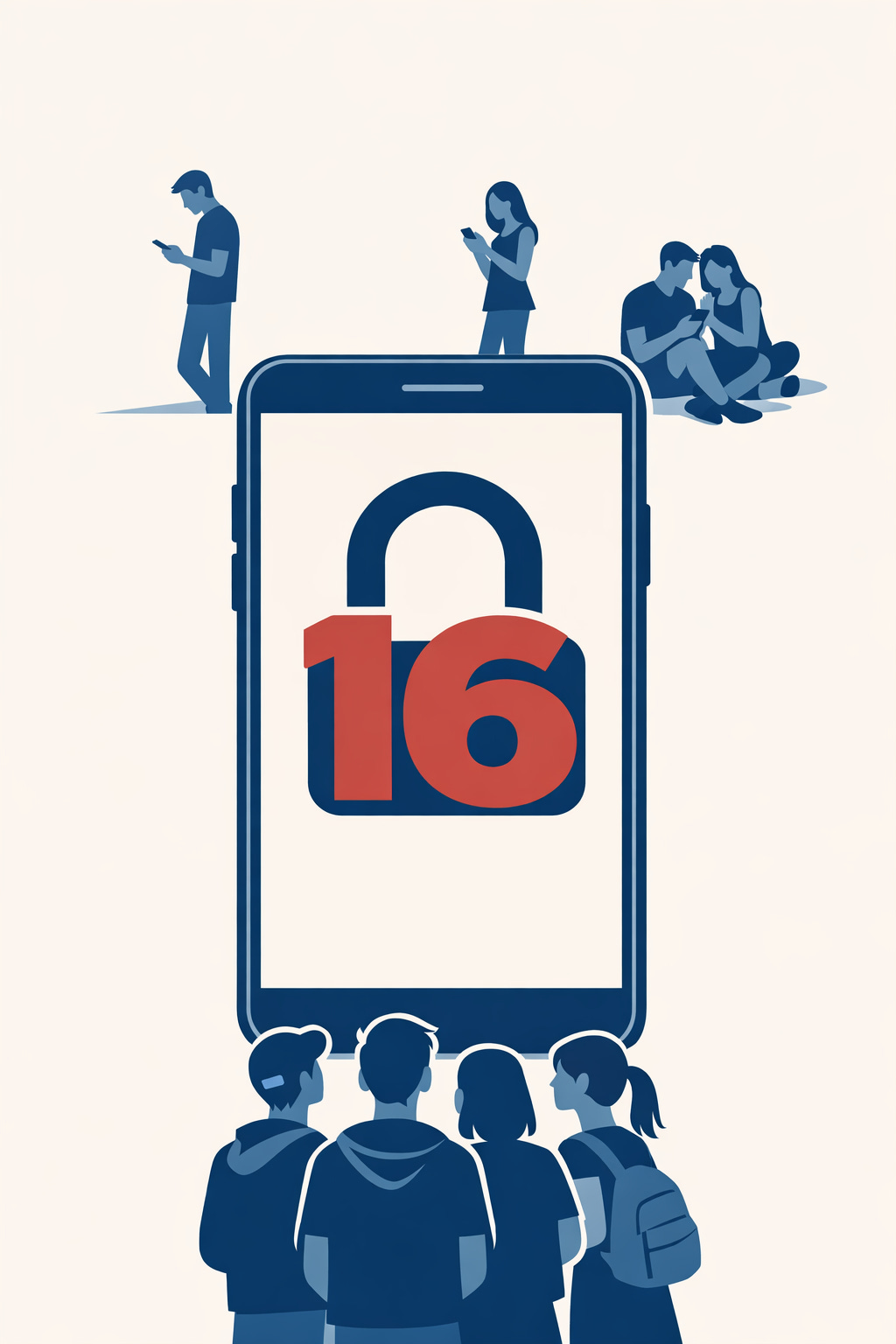
My guess is that this class actually reflects an emerging societal consensus, with important implications for all of us, including for the press. That is strongly supported by the limited polling publicly available (see links in previous sentence), which show support for such a ban across the political and age spectrums.
This does not, I think, offend the First Amendment. Children are not legally permitted to do a host of things adults are, from purchasing alcohol, tobacco (or marijuana) or firearms to gambling to driving to voting. Student press in middle school is subject to greater restriction than high school press, which in turn is more constrained than college journalism.
Thinking through an age-based ban
In the face of a general sense that social media, while enriching society in some ways (especially democratization) has also debased it in important others (disinformation, irresponsibility, loss of trust), and given our inability, pace Churchill, to find a viable path to reform, a ban for children may well make sense. Certainly, some of the effects of social media on them seem especially troubling.
A ban for children would have the virtue, I think, of classifying social media as analogous to alcohol, tobacco and firearms—something in which many adults may wish to indulge, while acknowledging that doing so carries risk and should, ideally, be done in moderation and responsibly. If this stigmatizes some sorts of social media behavior, so much the better. And such a ban, as the analogies demonstrate, would not need to be fully effective (as it likely wouldn’t be) to have significant impact.
What would such a change mean for journalism?
Directly, not much, as people under 16 are not huge news consumers—or, if they are, are not terribly attractive targets for news marketing, especially in an age of paywalls and nonprofit memberships. But indirectly, I think the impact could be quite meaningful. If legislation banning social media for children was enacted, it would reflect a growing social sanction, and would very likely temper the more extreme uses of the platforms by adults and institutions who crave broad social acceptance. These would include most large companies and many political and other leaders. (Although perhaps not Donald Trump, who seems oblivious to many social norms. But his era is much closer to its end than its beginning in any event).
For newsrooms themselves, social media might return to its early role as a forum for breaking news and continue to diminish as a distribution channel. For individual reporters, the effects might also be salutary—continuing social media as a vehicle for less formal interaction with readers, but also even more strongly discouraging attempts to shock, inflame or even just oversimplify.
The wider picture
The politics of banning social media for children are more complicated. My own increasing sense is that this is one of those issues on which public officials and other politicians are falling behind the evolving views of their own followers. The platforms will be reflexively opposed, but could well come around to seeing such a move as a regulatory line that could help them fend off further incursion, and perhaps also limit their litigation risk.
I left that classroom visit last month, as I almost always do when visiting schools, heartened by the engagement of students, and especially so because people so young were ready to acknowledge that their not-much-younger selves needed help from adults in cleaning up their information environment. I hope all of us will give serious thought to answering that call.
I think this raises an even deeper question for journalism. If social media, as seems increasingly supported by the evidence finally coming out in these trials, is akin to tobacco, alcohol, or gambling -- what does it mean that journalists have using it as such a primary distribution channel for our work, which is meant to be in the public interest? I recently interviewed one of the thousands of plaintiffs suing social media companies for the damage they inflicted on them as a teenager -- for stealing their childhood, essentially. It was a heartbreaking interview for a lot of reasons. But I left it feeling very uncomfortable that as journalists we have relied (and continue to rely) so heavily on these apps and companies. We're putting our work onto the same products that are ruining the lives of 11 year olds? Directly and indirectly supporting companies that knew about these harms and hid them and continue to deny them? I don't think that's a small moral matter to reckon with.
No doubt this is true and happy to see consensus. I seen same anecdotally.
Also, no doubt the platforms oppose this with the same effective vigor that for example, big ag opposes restrictions on megafarms and manure dumping. Pick your own obvious-harm/industry culpability combo. But corporates in these situation never, ever stop even when 100's of thousands of people die as a direct result. That said, we somehow did intervene into this w oxycontin, so perhaps there is hope. Or maybe it follows from some massive set of lawsuits as in asbestos?